
Wind Load Physics: How Engineers Design a Post to Survive a Storm
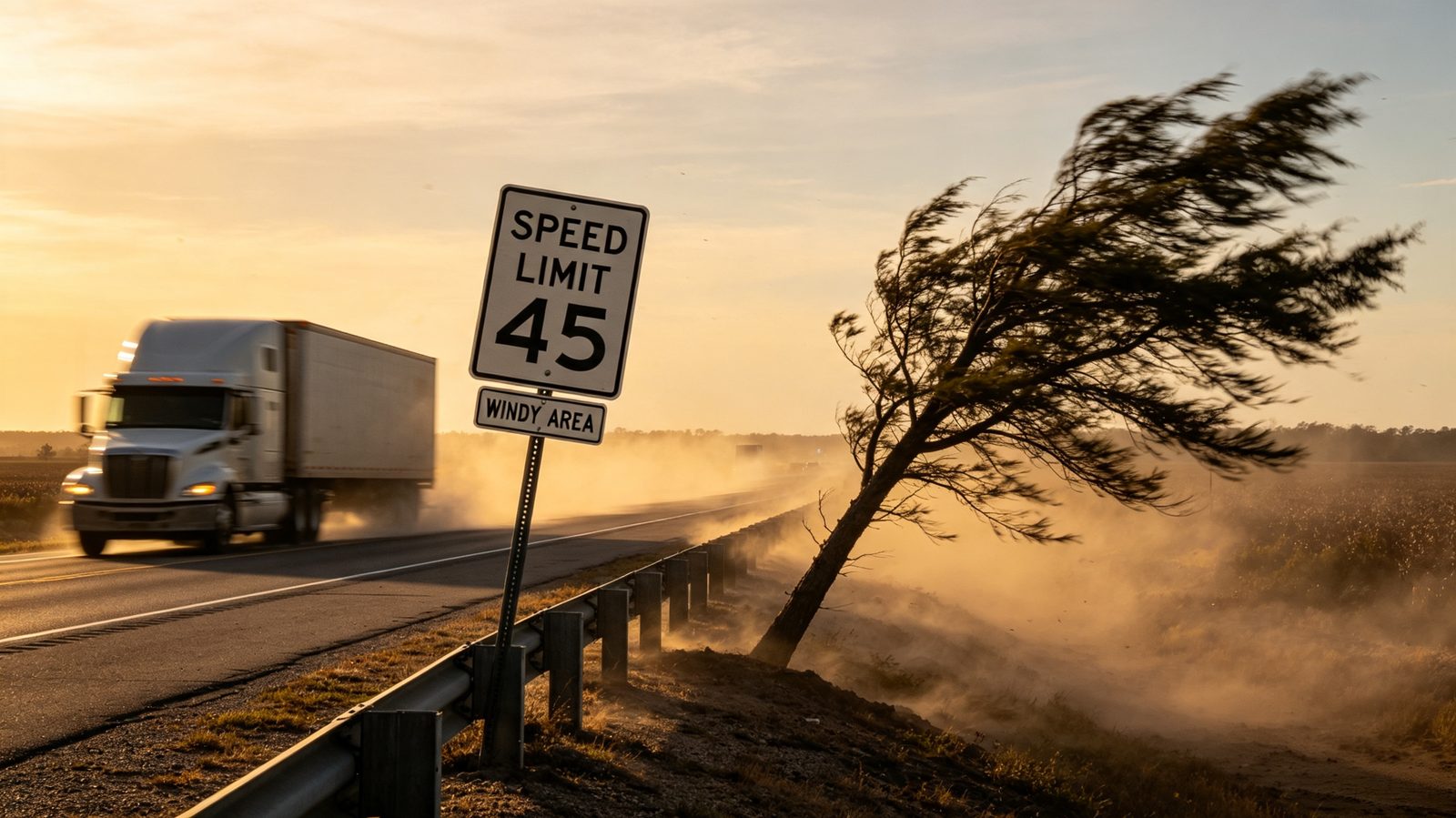
A road sign looks static, but it is constantly under mechanical assault from an invisible force: wind. Every gust that strikes a sign panel exerts pressure that travels down through the post and into the ground, and calculating that pressure accurately is one of the most important steps in designing a safe sign post.
The physics begins with a simple relationship from fluid dynamics: the dynamic pressure exerted by moving air increases with the square of wind speed. Doubling the wind speed roughly quadruples the force on a surface facing it. This is why sign posts in hurricane-prone coastal regions must be engineered far more robustly than posts in a sheltered inland valley, even when the sign panels themselves are identical in size.
In the United States, engineers do not calculate this force from scratch for every installation. Instead, they follow the AASHTO Standard Specifications for Structural Supports for Highway Signs, Luminaires, and Traffic Signals, a design code that provides regional wind-speed data, gust factors, and drag coefficients tailored to different sign shapes and mounting heights. The specification also accounts for the fact that wind speed generally increases with height above the ground, since surface friction slows air movement near the earth, meaning taller installations must be designed for stronger gusts than short ones in the same location.
Once the wind force on the sign panel is known, engineers calculate the resulting bending moment at the base of the post, essentially the twisting and leaning force trying to topple the structure. A wider or taller sign creates a longer lever arm, multiplying that force. The post's material, wall thickness, and cross-sectional shape must be chosen so the steel neither yields nor buckles under the worst-case wind event expected during its service life, typically calculated using statistical return periods for extreme wind rather than average annual wind speed.
Larger overhead sign structures, the kind that span multiple highway lanes, face an additional complication: fatigue. Rather than failing in one dramatic gust, these structures can develop cracks from millions of smaller wind-induced vibrations accumulated over years of service, a phenomenon studied closely since a major national research effort prompted a revision of the AASHTO specification to add explicit fatigue-design provisions.
The next time a small sign quivers slightly in a strong wind without falling over, that resilience is not luck. It is the visible result of an equation balancing wind speed, sign area, material strength, and decades of accumulated research into how air moves around a flat panel standing in its path.
Communication With Customers From the Heart, We Can Do Better! e-mail: jinshi@wiremeshsupplier.com
Hebei jinshi industrial metal co., ltd