
From Steel Coil to Standing Post: Inside the Manufacturing Line
Before a sign post ever stands beside a road, it exists as a flat coil of steel, sometimes weighing several tons, sitting in a factory. Turning that coil into a finished, code-compliant post is a multi-stage manufacturing process that combines mechanical precision with metallurgy.
The process typically starts with cold roll-forming. A continuous strip of steel is uncoiled and fed through a long line of paired rollers, each shaped slightly differently from the one before it. As the strip passes through each stage, it bends a little further toward its final cross-section, whether that is a U-channel, a square tube, or another profile. Because this shaping happens near room temperature rather than through heating, engineers describe it as cold forming, distinguishing it from the hot-rolling process used earlier to produce the flat steel coil itself. Cold working has a useful side effect: it increases the yield strength of steel specifically at the bends, so the finished post is measurably stronger at its folded edges than the flat sheet it began as.
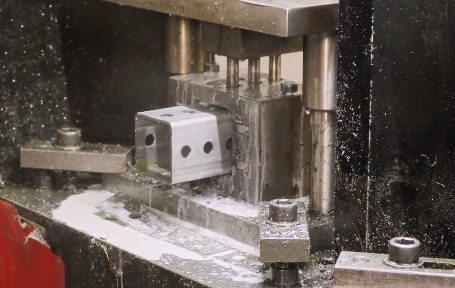
Holes for mounting bolts are usually punched before or during the roll-forming sequence, spaced at standardized intervals, most commonly every inch along the post's length in North American practice. Punching before forming allows manufacturers to use flat-sheet tooling, though the subsequent bending must be carefully controlled so it does not distort the pre-cut holes.
Once the profile is formed and cut to length, the post typically proceeds to a finishing step. For galvanized posts, this means the entire fabricated post, holes and cut ends included, is dipped into a bath of molten zinc, a sequencing choice known as after-fabrication or batch galvanizing, which ensures corrosion protection reaches every cut edge rather than being pre-applied to flat coil stock and then damaged during forming. Posts intended for a painted or enameled finish instead go through degreasing and a baked-on coating line.
Quality control runs throughout the process. Manufacturers check wall thickness, weight per linear foot, and coating thickness against relevant standards, since a post's certified strength depends on meeting a specified weight class, whether a lightweight economy grade for parking areas or a heavier municipal grade intended for public roads.
The entire sequence, from raw coil to a palletized, ready-to-ship post, can take a single length of steel from a flat, formless strip to a load-bearing structural component in a matter of minutes on a modern production line, a testament to how much industrial engineering underlies an object most people never consciously notice.
Communication With Customers From the Heart, We Can Do Better! e-mail: jinshi@wiremeshsupplier.com
Hebei jinshi industrial metal co., ltd