
Deaf, Blind, and Fast – Designing Signs for the Sensory Limits of Human Drivers
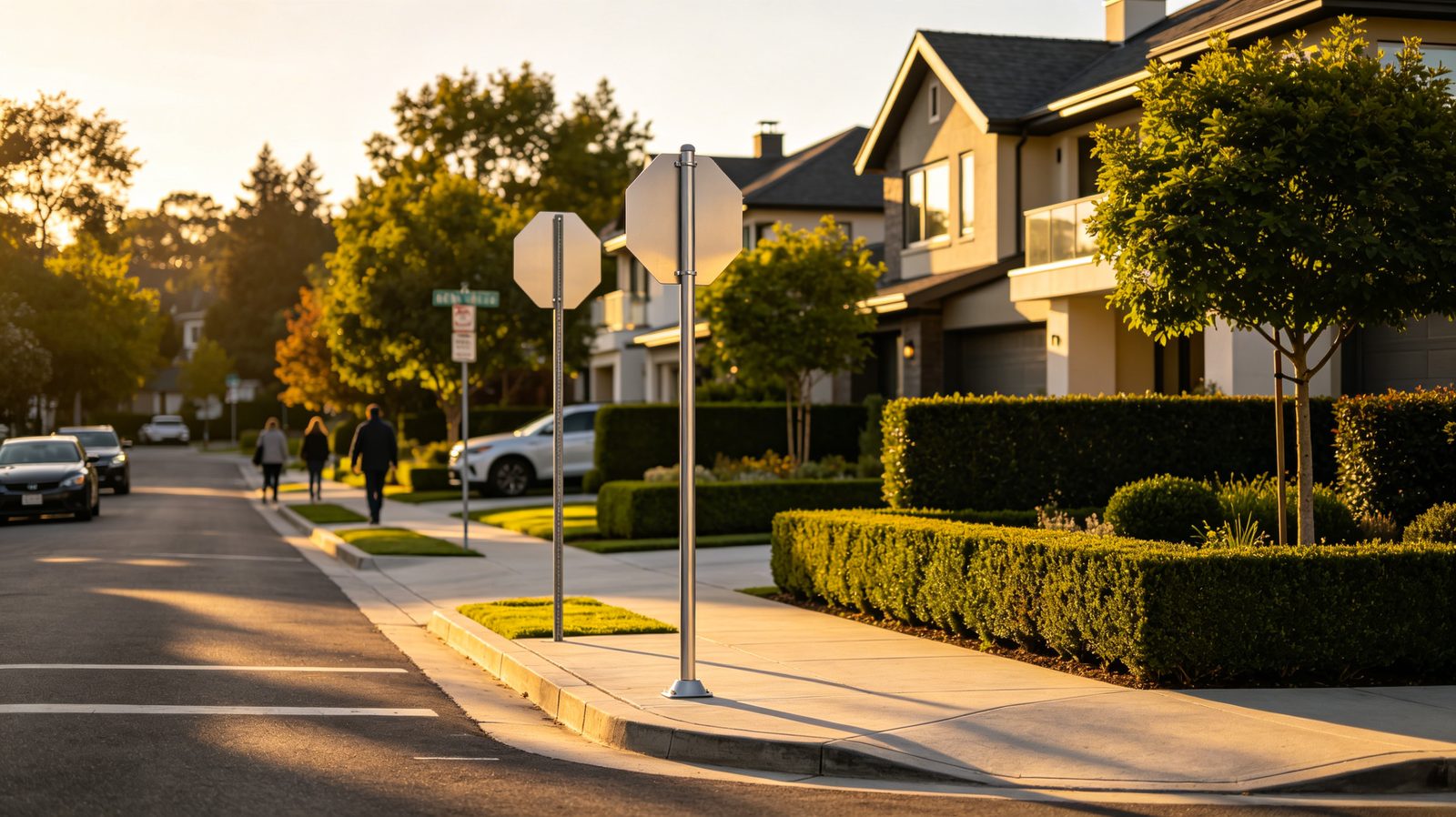
The human sensory system is a remarkable but fallible instrument, and the sign post is ultimately a device that compensates for its limitations. Age, speed, and distraction can effectively make a driver functionally blind or deaf to critical information, and sign engineers design with these deficits in mind.
Visual acuity declines with age. A 60-year-old driver requires roughly three times more light to see an object than a 20-year-old and may experience a 50% reduction in contrast sensitivity. The MUTCD accounts for this by setting retroreflectivity minimums based on a 60-year-old observer. Sign materials are selected so that even an older driver receives sufficient luminance to read the legend from the required decision distance. Higher-contrast sheeting types, such as microprismatic materials with a high specular component, are increasingly specified on signs serving aging populations.
Color vision deficiencies affect approximately 8% of the male driving population. Standard traffic signs avoid relying solely on hue for critical meaning. The red STOP sign is not just red; it has a unique octagonal shape. The yellow diamond warning sign retains its warning message even to a driver who cannot distinguish yellow from white. Symbolic signs are preferred over text-only signs whenever possible, as symbols are processed faster and are not language-dependent.
Peripheral vision limits combine with speed to create “tunnel vision.” At 100 km/h, a driver’s useful field of view narrows to about 40 degrees, roughly half of the useful field of view at low speeds. A sign placed too far to the side may be lost in this cone. Per industry design standards for high-speed roadways, signs are placed within a limited lateral offset from the driver’s line of sight, ensuring the entire sign falls within the functional visual field.
Consistent sign placement also supports drivers with hearing impairments, who cannot rely on auditory warnings from horns or sirens to redirect their attention. Placing signs at logical, predictable locations—right-hand side, consistent heights—ensures visual scanning patterns become automatic for all road users. Flashing beacons paired with signage capture attention via temporal contrast, which the motion-sensitive peripheral retina detects.
Every sign post is thus a prosthetic for our biological vulnerabilities, silently bridging the gap between what we are capable of sensing and what the road demands we understand.
Communication With Customers From the Heart, We Can Do Better! e-mail: jinshi@wiremeshsupplier.com
Hebei jinshi industrial metal co., ltd